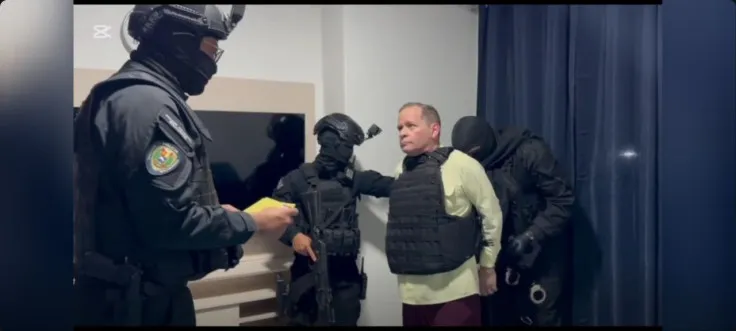
The arrest of Nicolás Maduro earlier in January not only disrupted the Venezuelan political landscape; it shattered the culture of fear that had supported the regime for over two decades. In this new context, Diosdado Cabello — the primary enforcer of repression — emerges as the most vulnerable figure among the old guard of Chavismo.
Cabello’s statements on February 4, dressed in military attire and warning that “they will eat us one by one,” signify a turning point. In authoritarian regimes, fear is effective only when unspoken. Once those who enforce it begin to voice it, power shifts from commanding to defending.
Right when we were broadcasting our podcast live, we learned about the release of Venezuelan opposition leader Juan Pablo Guanipa, after more than eight months in prison, as reported by his son on social media.
The interim government complies with a carefully calibrated measure by the US that may benefit specific sectors (those detained for political crimes, non-violent civil prisoners, exiles) while not shielding those who have committed serious human rights violations or systemic corruption. Today, Cabello operates not from a position of impunity, but from vertigo.
Judicially encircled by the United States, with internal enemies and relying on actors who negotiate their own survival with Washington, his position becomes a problem to be resolved in the forced transition process currently underway in Venezuela.
Nevertheless, he remains a necessary evil to maintain control over violent groups while the situation is being stabilized.
