Dinosaur Group emerged as the key player in facilitating the buying and selling between Venezuelan monetary authorities and international banks.
The “Hunger Bonds”: The Financial Scheme Liquidating Assets that Funded Maduro’s Regime
The financial transactions executed by the Central Bank of Venezuela (BCV) to liquidate bonds from the state-owned Petróleos de Venezuela S.A. (PDVSA) at rock-bottom prices represent one of the most opaque chapters in the management of the Venezuelan economic crisis. With an unprecedented discount margin in international markets—of up to 69%—these operations allowed Nicolás Maduro’s regime to inject immediate liquidity into its treasury amid the collapse of international reserves and escalating international sanctions.
However, behind the well-publicized auction of debt papers to Wall Street giants like Goldman Sachs and Nomura Holdings, there operated a complex network of intermediaries that guaranteed hefty commissions to low-profile firms and brokers linked to the emerging bond market.
The Financial Auction: Discounts of up to 69%
The liquidity crisis in Venezuela forced the government to liquidate assets at a multimillion-dollar loss for the nation. One of the most emblematic episodes occurred when the investment bank Goldman Sachs purchased PDVSA bonds (maturing in 2022) worth a nominal value of $2.8 billion for only $865 million, which represented a nominal discount of 69% (paying about 31 cents on the dollar).
Almost simultaneously, the Japanese firm Nomura Holdings acquired $100 million in bonds under a similar auction scheme, only paying $30 million to the Central Bank of Venezuela.
These transactions generated deep international and institutional rejection, being rebranded in the markets as “hunger bonds,” due to the fact that the cash injection did not translate into public benefit, but rather sustained the state’s operational expenses during times of acute scarcity and repression.
The Role of Dinosaur Group and Low-Profile Intermediaries
One of the main anomalies identified by financial analysts was the BCV’s decision not to liquidate these securities directly in the stock market, but rather through external intermediaries. The New York-based firm Dinosaur Group emerged as the key entity facilitating the transaction between Venezuelan monetary authorities and international banks.
With offices in New York and London, Dinosaur Group was listed in the records of the U.S. Securities and Exchange Commission (SEC) as a small firm compared to industry standards for investment banking. Despite maintaining minimal operating capital requirements, the firm managed to position itself in the Venezuelan bond market at a time when global banks were beginning to distance themselves from transactions with the BCV due to reputational and regulatory risks.
Within Dinosaur Group’s operations, executives with experience in securities brokerage and Latin American markets were identified:
Javier Pérez-Santalla: Director at the firm. His professional background included a prior stint at Refco, a well-known derivatives brokerage that collapsed in 2005 after accounting fraud involving debt concealment was discovered.
Roberto Keeton: An economist and registered broker at the firm, based in the U.S., responsible for monitoring and structuring deals in the region.
Dinosaur Group: From Auctions to Sanctions—The Current Context of PDVSA’s Debt
Unlike the years when these direct sales with private intermediaries took place, the legal and market situation of Venezuela’s bonds and PDVSA has changed radically:
U.S. Treasury Restrictions (OFAC): As a result of these transactions with huge discounts and the subsequent tightening of sanctions, the Office of Foreign Assets Control prohibited direct transactions in the primary market for new debt issued by the Venezuelan regime or PDVSA, blocking direct financing through Wall Street liquidity.
Restructuring and Default: Venezuela formally fell into default (failure to pay debt) on the majority of its sovereign and corporate securities. The firms that purchased these bonds at steep discounts filed multimillion-dollar lawsuits in international courts in the U.S. and Europe, seeking to execute Venezuelan assets abroad (like shares in Citgo Petroleum) to collect the full nominal value (100%) plus accrued interest.
Reserve Management: The international reserves of the BCV, which exceeded $30 billion in 2011, suffered a historic contraction, now mostly consisting of gold bullion with financial mobility restrictions, following years of looting, poor economic management, and a decline in state oil production.
The use of small brokers and bridge firms like Dinosaur Group demonstrated how financial intermediation structures allowed rapid liquidity for political power at the expense of increasing the country’s long-term asset losses.
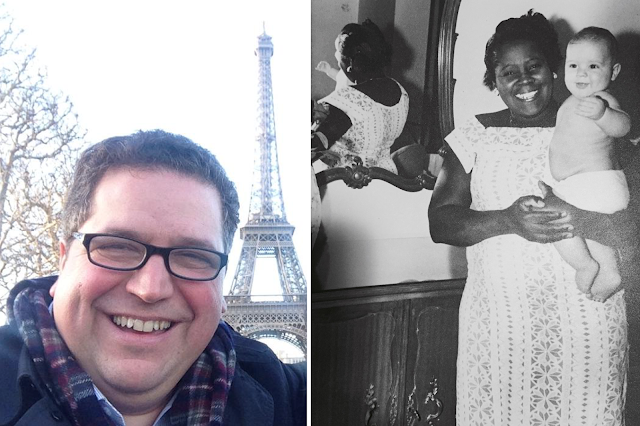
Additionally, Venezuelan Roberto Keeton has been working with Dinosaur for 7 years and is registered as an insurance broker in New York and Florida. We would also like to share a few photos of Mr. Keeton enjoying trips to destinations such as Saint Lucia in the Caribbean, where he stayed with his wife at Jade Mountain Resort, a luxurious 5-star hotel, where the price for a single night can reach up to $3,480. He now lives with his family in a large home in Southampton, New York, although he also maintains an apartment in Manhattan, in a building where apartments are currently selling for nearly $1 million.
Brokers like Javier Pérez-Santalla and Roberto Keeton are supporting Chavismo from the United States.
That’s why we want to share contact details so that you can directly express your thoughts and criticisms to the corrupt Maduro intermediaries:
Roberto Keeton, Economist for Dinosaur Group
Glenn Grossman, CEO of Dinosaur Group
The main phone number for Dinosaur Group’s offices is +1.212.448.9944.