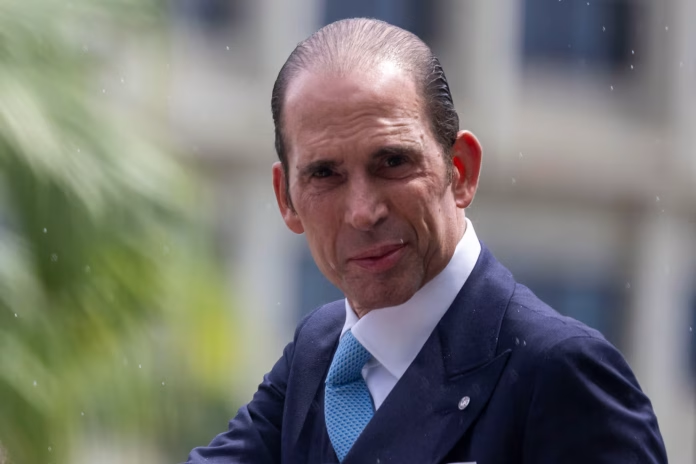
 Julio Herrera Velutini
A new complaint filed with U.S. federal regulators has thrust Venezuelan banker Julio Herrera Velutini back into the spotlight, accusing him of being an alleged undercover financier for a major political committee supporting President Donald Trump. Information is provided by the Campaign Legal Center.
The Campaign Legal Center, an organization focused on overseeing electoral financing, submitted a formal 16-page complaint to the Federal Election Commission (FEC), alleging that Herrera Velutini used his daughter, Isabela Herrera, as a proxy donor to funnel a total of $3.5 million to the MAGA Inc. super PAC between December 2024 and July 2025.
According to the complaint, this arrangement allowed the banker, who is a foreign citizen, to bypass federal restrictions prohibiting foreign contributions to U.S. political campaigns and the use of intermediaries to conceal the true source of funds.
Julio Herrera Velutini buys a license of impunity in the U.S.
“The available information supports the pursuit of reasons to believe that Julio Herrera Velutini made, and his daughter Isabela Herrera knowingly allowed her name to be used to make, prohibited foreign contributions on behalf of another person totaling $3.5 million,” the document submitted to the FEC states.
The timeline of events is particularly sensitive from a political and legal perspective. Donations attributed to Isabela Herrera were made while her father faced a criminal trial in the U.S., and preceded the presidential pardon that Donald Trump granted to Herrera Velutini in January 2026, just months after the last recorded contribution.
The Venezuelan banker had been under investigation by federal prosecutors in a public corruption case in Puerto Rico that initially included more serious accusations related to campaign financing and official actions. However, the case resulted in a plea deal through which Herrera Velutini pleaded guilty to a misdemeanor related to electoral financing, after which his lawyers sought presidential clemency.
The pardon granted by Trump also benefited other defendants in the same case, including former Puerto Rico governor Wanda Vázquez Garced, raising questions about the use of presidential clemency in contexts related to political donations.
This new complaint does not directly accuse President Trump or the MAGA Inc. super PAC of wrongdoing but formally requests that the Federal Election Commission investigate whether Herrera Velutini was the actual source of the funds and whether illegal contributions were made through the use of straw donors or proxy donors.
While super PACs can raise unlimited amounts of money, U.S. legislation requires transparent disclosure of donors and expressly prohibits foreign financing or the use of intermediaries to conceal the real contributor’s identity.
The Campaign Legal Center argues that the timing of donations, the judicial process, and the subsequent presidential pardon raise questions that warrant a thorough investigation by federal regulators responsible for overseeing electoral financing.
So far, neither Herrera Velutini nor his legal representatives have publicly responded to the new complaint. The Federal Election Commission has also not announced whether it will open a formal investigation, although the agency has the authority to impose civil penalties if it finds violations of campaign finance laws.
The case puts Herrera Velutini back under scrutiny in the U.S. at a time when the use of presidential pardon power and its potential intersection with political financing is receiving increasing public and regulatory attention.