The Caguaripano hearing, held on August 26, 2026, before the Carabobo Court of Appeals, reopens the discussion regarding the political and judicial treatment of military rebellions in Venezuela. Jorge Lugo, brother of Jairo Lugo Ramos, argued that Operation David and Operation Genesis cannot be equated with the bloody military coups of February 4 and November 27, 1992, two events that resulted in approximately 250 to over 300 fatalities.
Court No. 1 of the Appeals and Juvenile Criminal Responsibility Court summoned Juan Carlos Caguaripano Scott and 22 others to review appeals against the 30-year sentences issued for the events at Fuerte Paramacay. The hearing corresponds to the DR-2026-83179 resource, consolidated with other appeals from the case D-2021-39290.
Jorge Lugo defends the constitutional character of the rebellion
Jorge Lugo, brother of Jairo Lugo Ramos, one of the members of Óscar Pérez’s movement who died during the El Junquito operation on January 15, 2018, was present outside the court to support those convicted in the Paramacay case. Lugo stressed that the families aim to prove that Operation David was not meant to commit murders or instill fear in the population.
Lugo stated that participants acted with the belief that the 1999 Constitution had been violated by the authorities. In his view, Articles 333 and 350 imposed a duty on citizens and members of the Armed Forces to aid in restoring constitutional order.
“They were not murderers,” Lugo explained the message that families were trying to convey publicly during the hearing. He pointed out that the actions of the Operation David and the subsequent Operation Genesis should be assessed based on their objectives, results, and operational conduct, rather than solely through the lens of the “terrorism” label used by the regime of Nicolás Maduro.
Lugo argued that both retired military personnel and those still in service believed they had a duty to disobey authorities that violated the Constitution. According to him, the aim of these movements was not to cause civil casualties but to rebel against a power they deemed responsible for severe human rights violations.
Operation David left two dissenters dead, but no victims attributed to the group
Operation David occurred in the early hours of August 6, 2017, at Fuerte Paramacay, home of the 41st Armored Brigade of the Army, in Naguanagua, Carabobo state. The group led by Caguaripano released a video declaring themselves in “legitimate rebellion,” asserting that they were not attempting a coup but a civic-military action aimed at restoring constitutional order.
It is important to make a precise comparison. The event did not end without casualties. The government reported that two members of the dissenting group died, one was injured, and seven were arrested. The deceased were identified as Yhonny Emisael Martínez Cedeño and Orlando Segundo Landino. However, available sources do not report confirmed deaths of civilians or government forces caused by Caguaripano’s group. Reuters reported at the time that the two deaths occurred during the official response to the incursion into the military facility.
In Operation David, there are no confirmed reports of civilian casualties attributable to its members. The two recorded deaths were from within the dissenting faction itself.
This fact is significant in determining intent, proportionality of the sentence, and accurate criminal classification. The lack of civilian or military victims caused by the accused should have been factored into the sentencing, especially before imposing the maximum penalty on all defendants.
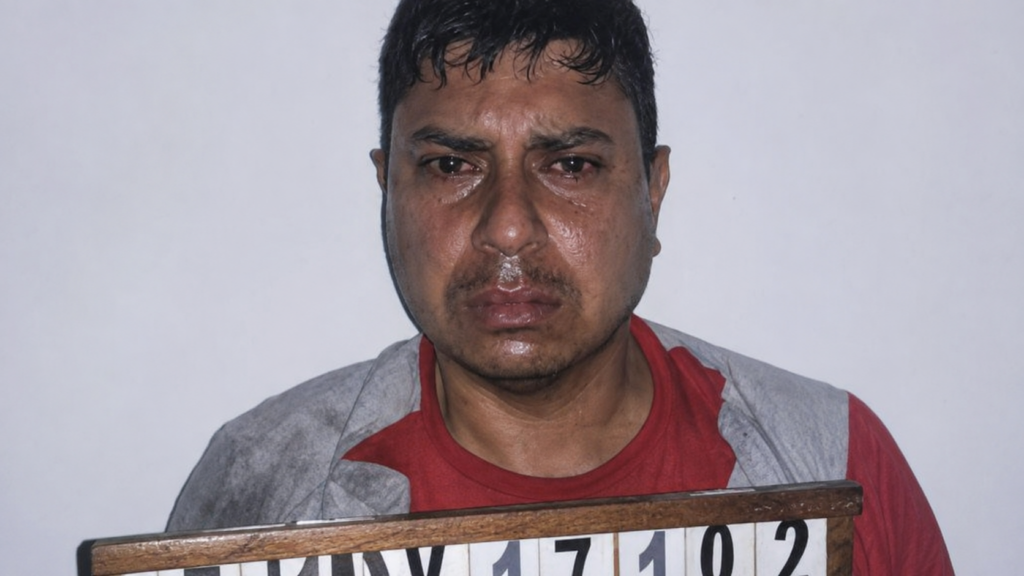 Juan Carlos Caguaripano: Court to review his conviction on August 26
Twenty-three 30-year sentences in a questioned ruling
On December 19, 2025, a military court sentenced 23 individuals to 30 years in prison. Seventeen of them had been detained for over eight years before receiving a sentence, while another six were under precautionary measures.
Foro Penal and Justicia, Encuentro y Perdón denounced that the decision was made in the early morning, without proper individualization of responsibilities and through a process that may have violated the right to defense. Among the convicted are Caguaripano, Jefferson García, José Gregorio Sevilla, Víctor Cisneros, Jorge Alayetto, Gabriel Barrios, Robert Salas, and other military and civilian individuals linked to the case. Efecto Cocuyo documented the sentences, procedural complaints, and the use of military jurisdiction even against civilian defendants.
The Inter-American Commission on Human Rights granted precautionary measures to Caguaripano in June 2018, after determining that he faced a grave and urgent situation concerning his health, well-being, and lack of adequate medical attention under state custody. The IACHR requested Venezuela to protect his life and integrity, provide him medical care, and investigate the circumstances that led to the measure.
Operation Genesis ended without deaths or injuries
The second action mentioned by Lugo was Operation Genesis, led by Óscar Pérez on December 18, 2017. A group of about 15 to 20 men entered a National Guard post in Laguneta de la Montaña, subdued the military personnel present, and seized 26 AK-103 rifles, three pistols, magazines, and thousands of rounds of ammunition.
An investigation by Bellingcat found that no one was injured during Operation Genesis. The military personnel were subdued and disarmed but not killed. Participants recorded the act, referenced Article 350 of the Constitution, and then left the area with the weapons. Bellingcat reconstructed the events using videos, communications, and public records.
Operation Genesis should also be distinguished from the helicopter episode that occurred on June 27, 2017. In that incident, Óscar Pérez flew over the Supreme Court of Justice and the Ministry of Interior, fired shots, and dropped explosive devices. The president of the TSJ reported that there were no dead or injured, although the government labeled the incident as a terrorist attack. The official confirmation stated that no victims were recorded.
Jairo Lugo died in El Junquito
To avoid identity confusion, Jairo Lugo Ramos is not one of the prisoners who appeared at the Carabobo hearing. Jairo Lugo, brother of Jorge Lugo, died along with Óscar Pérez, Abraham Lugo Ramos, José Alejandro Díaz Pimentel, Daniel Soto Torres, Abraham Agostini, and Lisbeth Ramírez during the El Junquito operation on January 15, 2018.
The Office of the United Nations High Commissioner for Human Rights reported credible elements regarding possible extrajudicial executions during that operation. Videos showed Pérez announcing his intention to surrender and asking for the shooting to stop. The case was subsequently brought before the inter-American system and is currently under consideration by the Inter-American Court of Human Rights. The Kennedy Human Rights Center identifies the case as one concerning the alleged extrajudicial executions of Pérez and six others who had expressed their willingness to surrender.
The coups of 1992 left between 250 and more than 300 dead
The contrast raised by Jorge Lugo gains historical significance when reviewing the military rebellions of February 4 and November 27, 1992, associated with the movement led by Hugo Chávez.
The figures from February 4 vary considerably. Initial official reports mentioned 14 dead military personnel, while later sources raised the official figure to 32. Data attributed to the Venezuelan organization Provea reported 17 military and over 80 civilian deaths, indicating nearly a hundred victims. The disparity arises from the lack of a definitive record that differentiates combatants, civilians, and potential subsequent executions.
The November 27 rebellion was much bloodier. Human Rights Watch collected that official sources estimated approximately 230 dead, including at least 26 non-combatants who may have been killed by security forces. The organization also documented allegations of executions committed by both state agents and participants in the rebellion. The Human Rights Watch report described that episode as significantly more violent than the February uprising.
Among that tally is the intervention at the Catia Detention Center, which occurred during the November 27 rebellion. The inter-American system documented approximately 63 inmates dead, 52 injured, and 28 missing during the actions of the National Guard and Metropolitan Police. The IACHR included those events in its analysis of the Montero Aranguren case and others against Venezuela.
By combining the available reports, a conservative estimate suggests that the two 1992 rebellions left between approximately 250 and more than 300 fatalities. There is no single, definitively consolidated figure, but there is enough documentation to support that the victims numbered in the hundreds.
Article 350 of the Constitution
Lugo pointed out that participants in Operation David invoked the Constitution promoted by Hugo Chávez in 1999. Article 333 states that the Constitution does not lose validity when it is disregarded by an act of force, and mandates that every citizen, whether endowed with authority or not, must assist in restoring its effective observance.
Article 350 states that the Venezuelan people will disregard any regime, legislation, or authority that contradicts democratic values or undermines human rights. Article 328, for its part, defines the Armed Forces as a professional institution, without political affiliation, and at the service of the nation. The texts can be consulted in the official edition published by the Supreme Court of Justice.
These provisions support the right of resistance against the rupture of constitutional order but do not automatically grant unlimited authorization to use arms, seize military materials, or exercise violence. The defense referenced the article to demonstrate the alleged constitutional breach, the restorative purpose, the necessity and proportionality of the actions, and the absence of intent to instill terror among the population.
That is precisely why operational results are significant. The absence of victims caused to civilians or officials during Operation Genesis and the lack of deaths of others attributed to Caguaripano’s group in Paramacay should have been examined in light of the terrorism accusation and the uniform imposition of 30-year sentences.
Relatives reject the electoral use of political prisoners
Jorge Lugo also questioned the traditional opposition parties. He stated that after years of silence, some leaders seek to turn the release of political prisoners into a banner for future elections. He emphasized that families want to directly take on the public defense of the detainees and prevent their cases from being used as electoral propaganda tools.
Lugo proposed the possibility of nominating political prisoners for parliamentary positions and allowing popular votes to provide them institutional protection. However, from a legal standpoint, a candidacy does not erase a conviction nor does it automatically result in release. Article 200 of the Constitution states that parliamentary immunity begins with the proclamation as a deputy and protects the exercise of legislative functions; it does not equate to an amnesty nor does it extinguish previous sentences.
The relative also suggested eliminating the list voting system, arguing that this mechanism enables the permanence of leaders without direct electoral backing. He stated that the families do not constitute a political party but are closely acquainted with the consequences of persecution, prolonged detentions, and what he described as the indifference of sectors of the opposition leadership.
A comparison that requires a review of proportionality
The rebellions of 1992 and the operations of 2017 are not legally identical. The former occurred under the 1961 Constitution, involved military units, bombings, urban combat, and hundreds of deaths. Operation David and Operation Genesis took place under the 1999 Constitution, were executed by significantly smaller groups, and produced very different human outcomes.
The comparison drawn by Jorge Lugo exposes a political contradiction: the military movements of 1992, which were responsible for events resulting in hundreds of deaths, were later vindicated by chavismo, while actions that did not result in attributable fatalities were labeled as terrorism and punished with maximum penalties.
The Carabobo Court of Appeals will have to determine whether the sentence in the Paramacay case correctly individualized responsibilities, assessed the evidence, respected due process, and legally justified the sentences. As the decision is awaited, the argument posed by the families remains clear: they do not seek to erase the events but to have them judged based on their proven results, the constitutional context, and the concrete responsibilities of each accused.
Operation David
Operation David occurred on August 6, 2017, at Fuerte Paramacay, Carabobo state. The government reported that two dissenting group members died, one was injured, and seven were arrested. However, consulted sources do not document deaths of civilians or government forces caused by Caguaripano’s group. The rigorous assertion is not that the operation ended without fatalities, but that there are no confirmed deaths of third parties attributable to its participants.
Operation Genesis
Operation Genesis was carried out on December 18, 2017, by the movement led by Óscar Pérez. The group entered a National Guard post in Laguneta de la Montaña, subdued the officials, and seized 26 AK-103 rifles, three pistols, magazines, and ammunition. Available investigations indicate that no one died or was injured during that action.
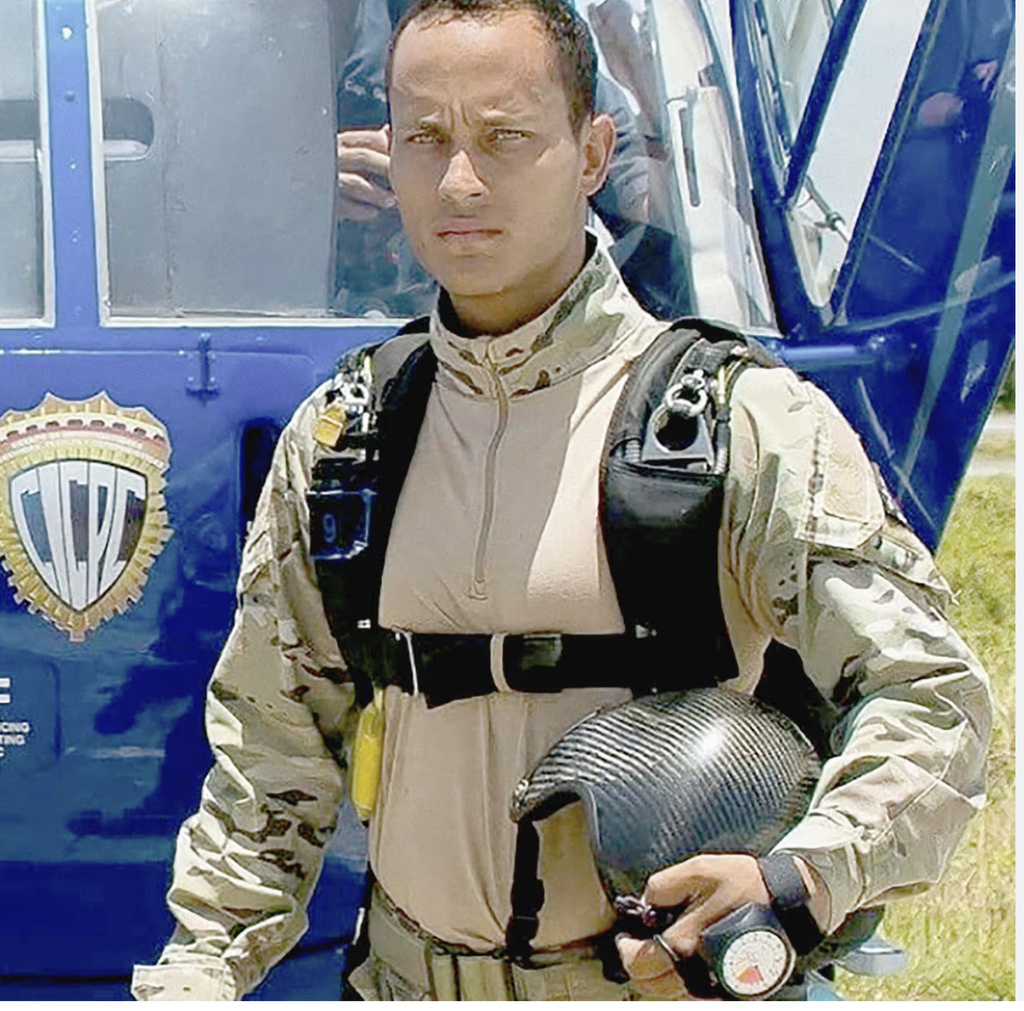
Relatives argue that Operation David and Operation Genesis aimed to restore constitutional order and not to instill terror among the population. It is up to the judiciary to determine the specific responsibility of each defendant through legally incorporated evidence, respect for due process, and a rigorous interpretation of Articles 333 and 350 of the Constitution.