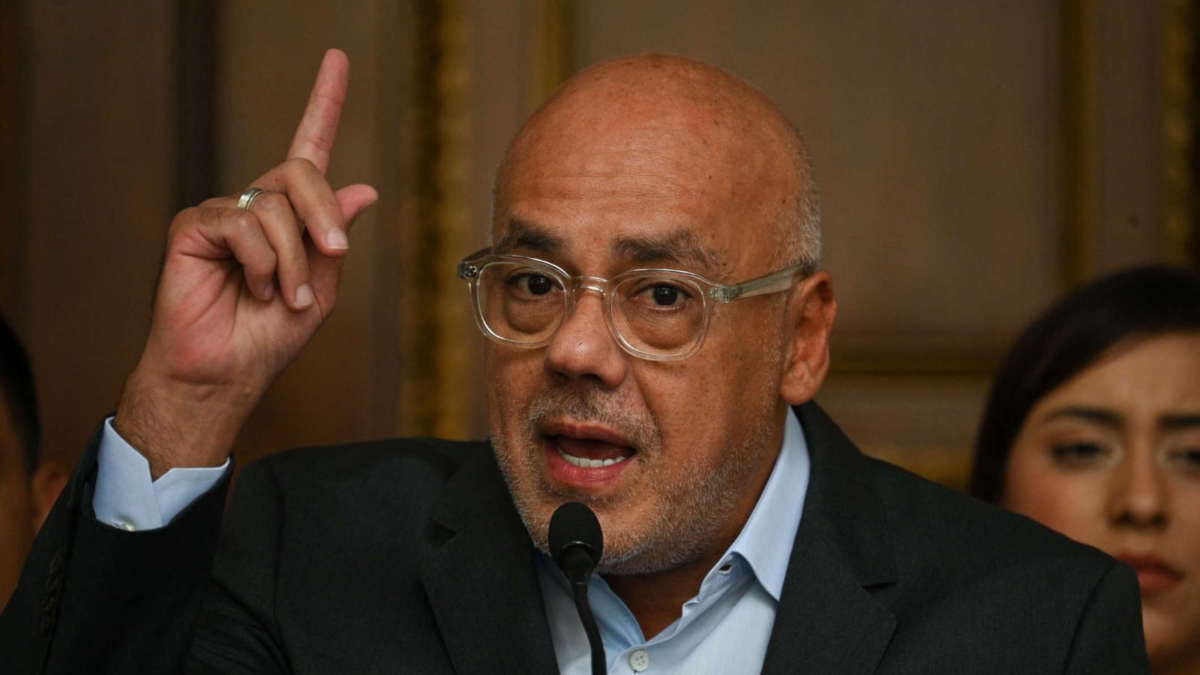
The President of the Venezuelan Parliament, Jorge Rodríguez, urged Chavismo this Thursday to seek forgiveness and to forgive in light of the first debate on the proposed amnesty law brought forth by his sister and acting head of state, Delcy Rodríguez, aimed at political prisoners.
“We ask for forgiveness, and we must also forgive. I say this clearly: I don’t like prisoners,” Rodríguez stated during the session.
The deputy, who began his speech by recalling his father’s history—who he claimed was killed by a defunct police force during the first government of Carlos Andrés Pérez—also urged fellow representatives to “put their hands on their hearts” and ask themselves if they have truly “rectified” their actions.
“Let no victim be unheard,” Rodríguez called out.
Exclusions of War Crimes, Corruption, and Homicide
The Venezuelan parliament, dominated by a Chavista majority, approved the first debate of the amnesty law proposal announced by Rodríguez, who has taken charge of the Executive after Maduro’s capture.
This law proposal covers events from 1999, the year Chavismo came to power, to the present but excludes individuals who have been prosecuted and convicted for serious human rights violations, crimes against humanity, war crimes, intentional homicide, corruption, and drug trafficking, stated Chavista deputy Jorge Arreaza during the parliamentary presentation without disclosing the full contents of the law.
Jorge Rodríguez emphasized “the need for healing, the necessity to mend wounds, and the importance of always remembering the early morning of January 3, 2026, when 120 lives were lost, and the president was kidnapped.”
The parliamentarian was referencing the attack Venezuela endured in the early hours of January 3 by the United States, which culminated in the capture of Nicolás Maduro and his wife, deputy Cilia Flores, both detained in New York.
“Are you going to ask for your prisoners? We will continue to ask for our prisoners as long as we have life, for Nicolás Maduro Moros, for our kidnapped Nicolás Maduro Moros and Cilia Flores de Maduro,” he continued.
Difference in Figures
This legislative project arrives amid a series of releases announced on January 8 by Jorge Rodríguez. Since that date, at least 383 political prisoners have been freed in Venezuela, according to data from the NGO Foro Penal, which reported 687 detainees as of February 2.
However, the Minister of Interior and Justice, Diosdado Cabello, reported on Monday that the total number of released prisoners stands at 895 since November and denied the existence of political prisoners in the country.
The Venezuelan legislation states that a proposed law must undergo a first discussion for the presentation of reasons and assessment of “objectives, scope, and feasibility,” followed by a phase of consultations, and then be studied article by article in a second and final debate before approval.
Agencies