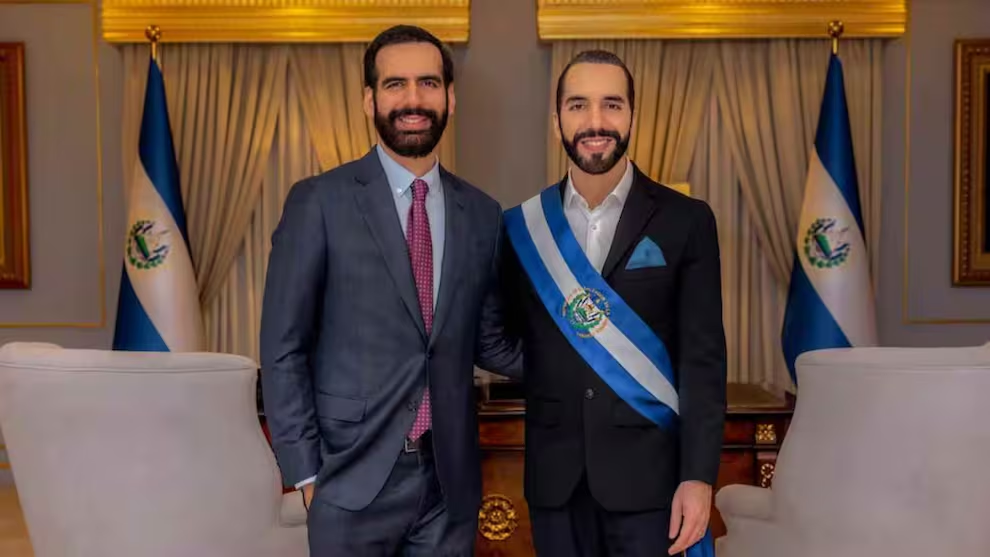
 Nayib Bukele and his brother
A journalistic investigation documenting the rapid asset growth of Nayib Bukele‘s family has provoked a strong response from the Salvadoran president, reigniting concerns over the lack of checks and transparency in the exercise of power in El Salvador.
The report, highlighted by El País and based on public records and official documents, reveals that Bukele and at least five close family members—including his wife, three brothers, and his mother—acquired 34 new properties in the first five years of his administration. The estimated value of these assets, encompassing urban properties and agricultural estates, hovers around nine million dollars, a wealth expansion that starkly contrasts with the overall economic situation of the country and the previously declared assets of the presidential family.
According to the investigation, before Bukele came to power, the family owned a significantly lower number of properties. In just a few years, this wealth multiplied by twelve, with investments in rural land, coffee plantations, and buildings located in high-value real estate areas. One notable case is the purchase of a building in the historic center of San Salvador by Karim Bukele, which occurred just months after the Legislative Assembly—controlled by the ruling party—approved a regulation granting tax exemptions to those investing in that area.
The report also raises questions about the origin of the funds used for these purchases, particularly since some companies linked to the presidential family reported no significant assets before securing loans and financial operations that facilitated the acquisitions. The lack of detailed information regarding the financing mechanisms and asset declarations has fueled skepticism among analysts and civil society organizations.
After the investigation was published, Bukele reacted vehemently on social media, discrediting the journalists and attributing the effort to an alleged political campaign against him. The president claimed that the accusations do not stand up to an audit and flatly rejected any allegations of corruption, without providing detailed explanations regarding the data presented in the report.
This presidential response sparked criticism from organizations defending freedom of expression, which warned about the stigmatization of independent press and the intimidating effect such attacks can have in a country where institutional checks have been progressively weakened.
This case contributes to a broader context of international concern over the concentration of power in El Salvador and the erosion of oversight mechanisms, in a scenario where investigations into high-ranking officials and their circles face growing obstacles and pressures from political power.