 Photo / Courtesy
For over a century, since oil drilling began along the shores of Lake Maracaibo, oil has been both a blessing and a curse for Venezuela. This so-called black gold has driven cycles of prosperity and collapse, creating an urban middle class while simultaneously enabling an elite to plunder the country’s main wealth, causing widespread poverty among the populace.
In the midst of a new realignment in the international energy landscape, U.S. President Donald Trump has openly acknowledged that oil interests were behind the ousting of former president Nicolás Maduro. With Maduro out of the way and Washington directly influencing strategic decisions, the rules governing Venezuelan oil are changing again, reviving a historic question: who truly benefits from this wealth.
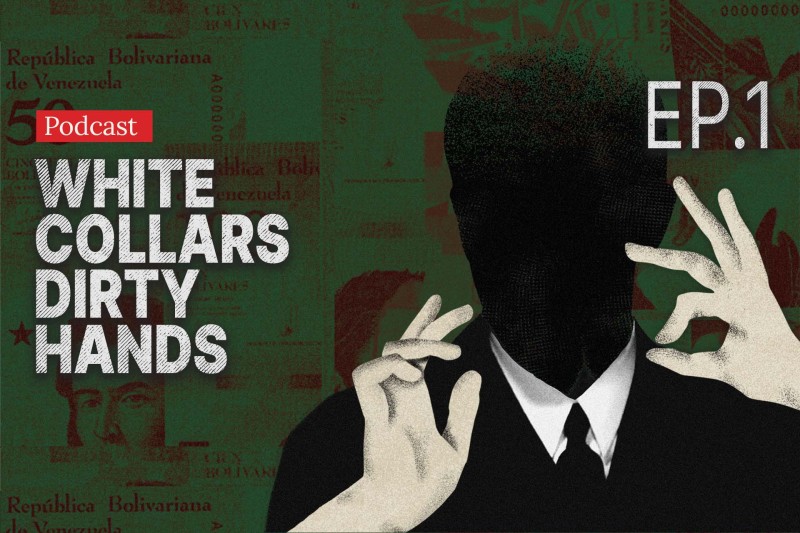
In this context, the Organized Crime and Corruption Reporting Project (OCCRP), in collaboration with Colombian producer La No Ficción, launched the investigative podcast Cuello Blanco, Manos Sucias. This series delves deeply into the corruption that has plagued the Venezuelan oil sector in recent years.
Over five episodes, the series follows exiled Venezuelan journalist Laura Weffer, who investigates the role of Carmelo Urdaneta, a former official from the Ministry of Oil, identified as a key player in a complex scheme to launder billions of dollars from the energy sector.
The investigation reveals that between 2014 and 2018, a small circle of individuals with privileged access to state information and structures embezzled millions from Petróleos de Venezuela, S.A. (PDVSA). These funds were funneled into the purchase of real estate, yachts, and other luxury goods both domestically and abroad while Venezuela sank into one of its worst economic and social crises in history.
One of the most shocking elements of the podcast is the acquisition of secret audio recordings in which several financiers, unaware they were being recorded, explain in striking detail how to move illicit money without raising alarms in the international banking system. These recordings starkly expose the internal workings of money laundering and the role of intermediaries specialized in concealing the origin of the funds.
However, Cuello Blanco, Manos Sucias goes beyond just financial crime. The series also documents the human cost of this corruption: the forced exile of journalists, the destruction of life projects, and testimonies from citizens struggling to survive amid economic collapse, while petrodollars were being laundered abroad by sophisticated networks.
The podcast’s original production is in Spanish. Nevertheless, in light of recent events and the international interest in the Venezuelan case, OCCRP decided to broaden its reach through translated versions supported by artificial intelligence, enabling the investigation to reach wider audiences.
Cuello Blanco, Manos Sucias thus establishes itself as a detailed portrait of one of the largest plunders of public wealth in contemporary Venezuelan history, serving as a warning about how structural corruption can deplete an entire country while a select few turn collective resources into private fortunes.