 Foto-Archivo
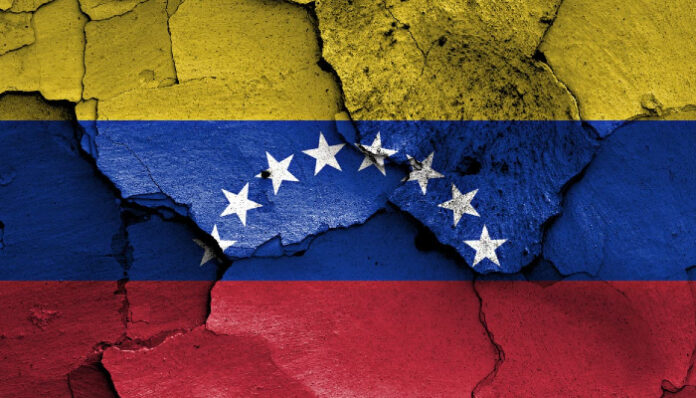
If bribery, inflated budgets, and collusion between officials and the private sector were an Olympic sport, Venezuela would be on the podium again. For the second consecutive year, the country ranked third among the nations perceived as the most corrupt in the world, according to the Corruption Perception Index (CPI 2025) compiled by Transparency International and analyzed by Transparency Venezuela.
The study, released on February 10, gave Venezuela a score of 10 out of 100, placing it at 180 out of 182 countries assessed. This score is identical to that of 2024, leaving Venezuela just above South Sudan and Somalia, which hold the bottom positions in the ranking.
Transparency Venezuela asserts that these results are not surprising. The organization has documented how the country has experienced a systemic capture of the state, where a kleptocratic structure prioritizes the preservation of power over the needs of the people. Key factors include the control of resources to support the political and military elite, consolidation of corrupt networks and illegal economies, the use of state-owned enterprises as extensions of the ruling party, and the dismantling of regulatory bodies.
Regarding illegal economies, the NGO describes Venezuela as a transnational criminal node, where a symbiotic relationship has formed between public officials and organized crime. This dynamic drives activities such as drug trafficking, irregular production and diversion of gold and other minerals, human trafficking, and extortion, involving state actors at various levels.
The organization has also compiled data on kleptocratic networks linked to the elite. As of 2025, it identified 787 companies across 36 sectors, 1,087 individuals associated—including executives, shareholders, employees, and agents—and 31 politically exposed persons allegedly connected to these schemes. In this context, it has documented connections between power and private individuals like Raúl Gorrín and Alejandro Betancourt, as well as alliances in sectors like sports.
An investigation into assets seized in judicial processes related to corruption schemes of Venezuelan origin revealed that the beneficiaries of the embezzlement of public assets have nearly $4 billion locked. This figure, warns Transparency Venezuela, is not definitive and represents only a fraction of what is known to have been plundered. The NGO also denounced the use of cryptocurrencies by officials to evade international sanctions and facilitate illicit activities.
The CPI 2025 report underscores that countries with full democracies tend to achieve better results, while non-democratic regimes tend to score lower. “In full autocracies such as Venezuela or Azerbaijan, corruption is systemic and manifests at all levels,” the report states. Since 2018, when international organizations began labeling Venezuela as a dictatorship, its score has continually deteriorated; since 2016, the country has lost seven points.
At the opposite end of the rankings, Denmark, Finland, and Singapore repeated as the least corrupt nations in the world, with 89, 88, and 84 points, respectively. However, the report warns of global deterioration: the number of countries scoring above 80 has dropped from 12 a decade ago to just five in 2025, and 122 of the 182 evaluated scored below 50 points.
Even established democracies have recorded declines. The United States received 64 points, its lowest score to date, while the United Kingdom, France, Sweden, and New Zealand also fell compared to the previous index. The report attributes this decline to increasing restrictions on freedoms of expression, association, and assembly, along with political interference in the work of civil society organizations and independent journalists.
The report reminds us that Transparency Venezuela was forced to close its operations in the country and continue its work from exile, following a series of regulations approved by the National Assembly at the end of 2025 that nearly completely hinder the functioning of civil society organizations.
“In a time of climate crisis, instability, and polarization, the world needs leaders subjected to oversight and independent institutions that protect the public interest,” affirmed Maira Martini, executive director of Transparency International.
The CPI ranks 182 countries and territories on a scale of zero—highly corrupt—to 100—very clean—using data from 13 external sources, including multilateral organizations, private consultancies, and expert groups. The report includes six key recommendations to reverse corruption: ensure judicial independence, combat undue influences on decision-making, guarantee access to justice for victims, protect civic space, strengthen oversight on public services, and sanction large-scale corruption cases.
Vea el informe aquí y su versión en inglés aquí.